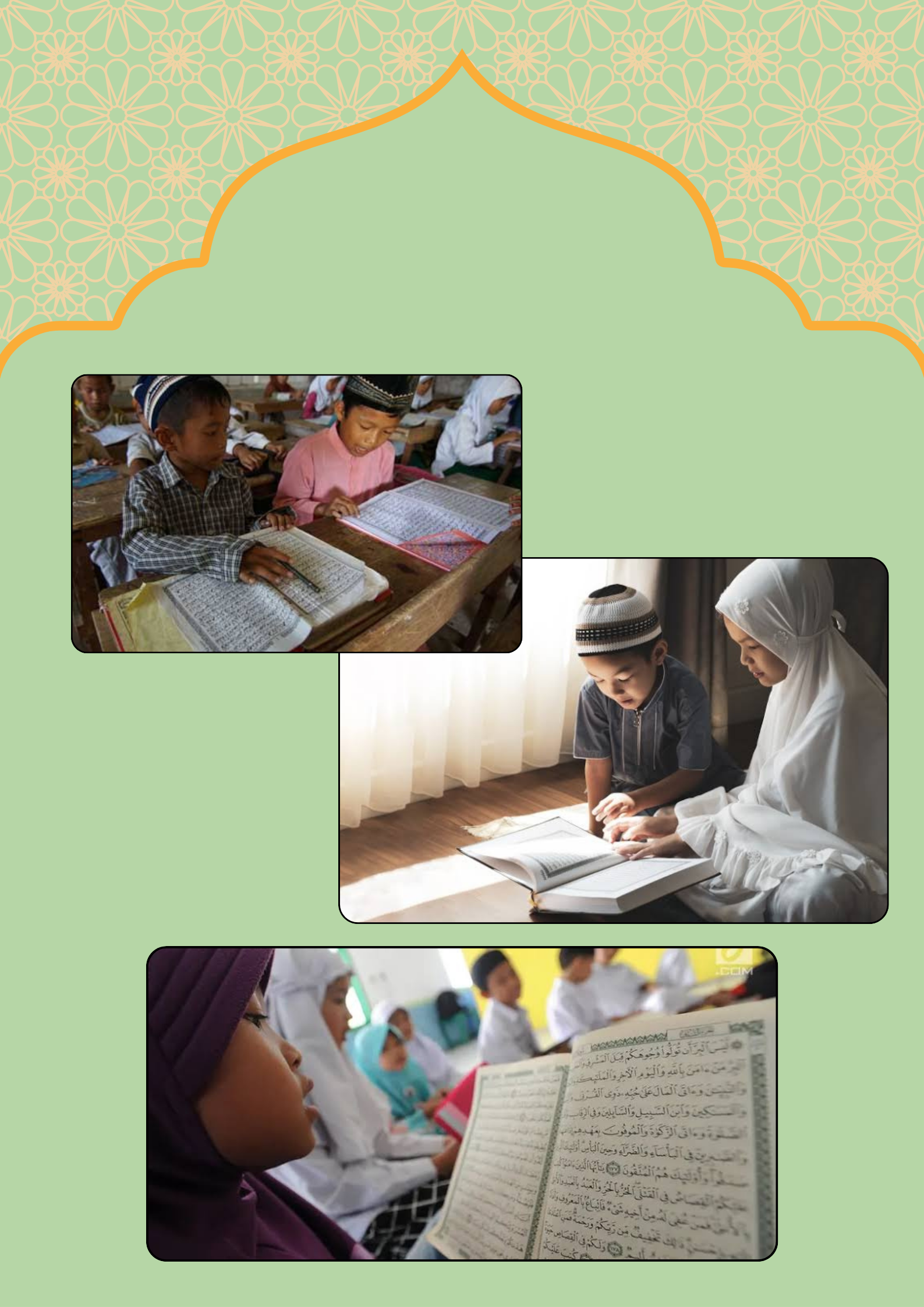
The Effectiveness of Learning to Read and Write Arabic Letters in Early Children at Taman Pendidikan Quran (TPQ)
DOI:
https://doi.org/10.51278/bec.v1i1.410Keywords:
Arabic Letters, Effectiveness Learning Quran, Early ChildrenAbstract
The purpose of this study is to describe process of learning to read and write Arabic letters in early childhood at Taman Pendidikan Quran (TPQ) Nurul Muttaqin 4, the students' interest in learning, positive impacts or benefits for students, opportunities in learning, and challenges faced during learning. The research method used is qualitative with the subject of early childhood aged 4-8 years at TPQ Nurul Muttaqin 4. Data collection techniques by observing the teaching and learning process of students and interviews with one of the teachers and students concerned. The research results obtained include: 1. The process of learning to read and write Arabic letters for early childhood at TPQ Nurul Muttaqin 4 using the iqro' method for reading and writing 2. The students' interest in learning is very large in learning because the parents of the students support it. and very open so that students are very interested in this learning. 3. The positive impact or benefits obtained by the students vary after participating in learning using the iqro' method, because each child has a different level of ability. There are children who are proficient in reading but lacking in writing Arabic letters. Vice versa. 4. The opportunities for learning are very good because the surrounding community is supportive and open with evidence that their children are entrusted to study at this TPQ. 5. The challenge faced during learning is the feeling of drowsiness that comes to students during learning, which makes it difficult for students to concentrate. The solution that can be done is that teachers can make learning as interesting as possible so that it makes students enthusiastic and interested in learning.
Keywords: Arabic Letters, Effectiveness Learning Quran, Early Children
References
Djamarah, Syaiful Bahri, and Aswan Zain. 2016. Strategi Belajar Mengajar. Jakarta: Rineka Cipta.
Ferdian Utama, Suhono. 2017. “KETELADANAN ORANG TUA DAN GURU DALAM PERTUMBUHAN DAN PERKEMBANGAN ANAK USIA DINI (Perspektif Abdullah Nashih Ulwan Kajian Kitab Tarbiyyah Al-Aulad Fi Al-Islam).” Elementary 3(2):107–19.
George, Boore. 2008. Metode Pembelajaran Dan Pengajaran. Jogjakarta: Ar-Ruz Media.
H Gardner. n.d. “Frames of Minds.” Cir.nii.ac.jp.
Libarkin C, Julie, dan Kurdziel P.Joseph. 2017. Qualitative Research Is an Unconstrained Approach to Studying Phenomena.
Nufus Hayati. 2015. “Model Pembelajaran Bahasa Arab Untuk Anak Usia Dini.” Jurnal Studi Islam 5(1).
Nurhuda, Zamzam, Dede Fatinova, and M. Wildan. 2020. “Metode Pengajaran Komunikatif Sebagai Strategi Pembelajaran Bahasa Bagi Siswa Usia Dini.” Jurnal Loyalitas Sosial: Journal of Community Service in Humanities and Social Sciences 2(1):1. doi: 10.32493/jls.v2i1.p1-14.
Perreault, William D., Joseph P. Cannon, and E.Jerome McCarthy. 2015. Essentials of Marketing?: A Marketing Strategy Planning Approach. New York: McGraw-Hill Education.
Sari, Anggun Nirmala, Djuani, and Muammar Qadafi. 2020. “Hijaiyah Pada Siswa RA Perwanida II Mataram.” Islamic EduKids: Jurnal Pendidikan Anak Usia Dini 2(2):14–26.
Siregar, IHSAN Ihsan, and IHSAN Ihsan Siregar. 2018. “Penerapan Metode Iqro’ Dan Pengaruhnya Terhadap Kemampuan Membaca Al-Qur’an Murid MDA Muhammadiyah Bonan Dolok.” Al-Muaddib?: Jurnal Ilmu-Ilmu Sosial Dan Keislaman 3(1). doi: 10.31604/muaddib.v1i1.370.
Sugiyono. 2010. Metode Penelitian Pendidikan Pendekatan Kuantitatif, Kualitatif, Dan R&D. Bandung: Alfabeta.
Suharno, Retnoningsih dan. n.d. Kamus Besar Bahasa Indonesia. Semarang: Widya Karya.
Sunanih. 2017. “Kemampuan Membaca Al-Qur’an Bagi Anak Usia Dini Bagian Dari Perkembangan Bahasa.” Early Childhood?: Jurnal Pendidikan 1(1):1–12.
Ulfah, Tsaqifa Taqiyya, ) * Muhammad, Shaleh Assingkily, and Izzatin Kamala. 2019. “Implementasi Metode Iqro’ Dalam Pembelajaran Membaca Al-Qur’an.” TA’DIBUNA: Jurnal Pendidikan Agama Islam 2(2):59–69. doi: 10.30659/JPAI.2.2.44-54.
Ulfatur, Rosyidah. 2022. “Hari Bahasa Arab Sedunia.” AIN Madura. Retrieved May 20, 2022 (https://iainmadura.ac.id/site/detberita/294-hari-bahasa-arab-sedunia#:~:text=Bahasa arab merupakan salah satu,internasional UNESCO dari 22).
Utama, Ferdian. 2017. “Pengenalan Aksara Melalui Media Gambar Terhadap Anak Usia Dini.” Jurnal Iqra’?: Kajian Ilmu Pendidikan 2(2):433–57. doi: 10.25217/JI.V2I2.169.
Zuldafrial. 2012. Strategi Belajar Mengajar. Surakarta: Cakrawala Media.